
Bandai-Asahi
National Park

Millions of years of volcanic activity and tectonic uplifts have produced the mountain ranges, lakes, and wetlands that comprise Bandai-Asahi National Park. The park covers the prefectures of Fukushima, Niigata, and Yamagata and includes numerous sites of geological, botanical, and spiritual significance. These include lakes and ponds near Mt. Bandai, the coniferous forest of Mt. Nishiazuma, and the Dewa Sanzan sacred mountains.
Highlights of the park
Successive eruptions of Mt. Bandai (1,816 m) created the distinct topography of the Bandai-Azuma and Inawashiro region in Fukushima Prefecture. On the northern slopes of Mt. Bandai, lakes and wetlands formed by volcanic activity make up Urabandai. On the south side of Mt. Bandai is Lake Inawashiro, Japan's fourth largest lake. The lake is the result of an eruption around 50,000 years ago.
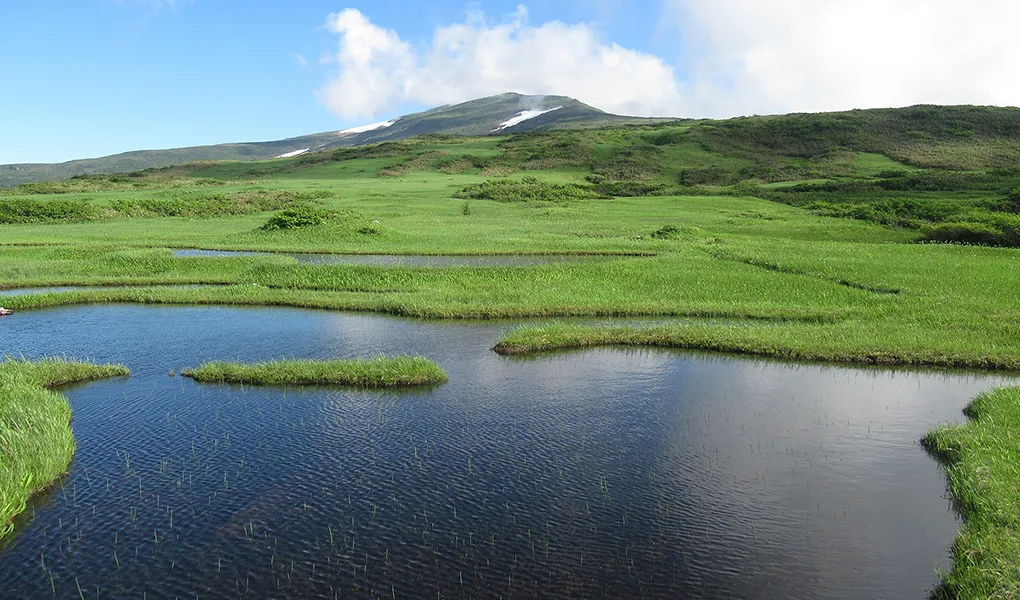
In Yamagata Prefecture, the three peaks of Gassan (1,984 m), Haguro (414 m), and Yudono (1,500 m)—collectively known as Dewa Sanzan—are sacred sites and have been places of pilgrimage for mountain ascetics for over 1,400 years. Native subalpine plants, meadows of colorful wildflowers, and ponds along the ridgeline of the Asahi mountains, located at the border of Yamagata and Niigata, contrast with lush forests in the foothills.
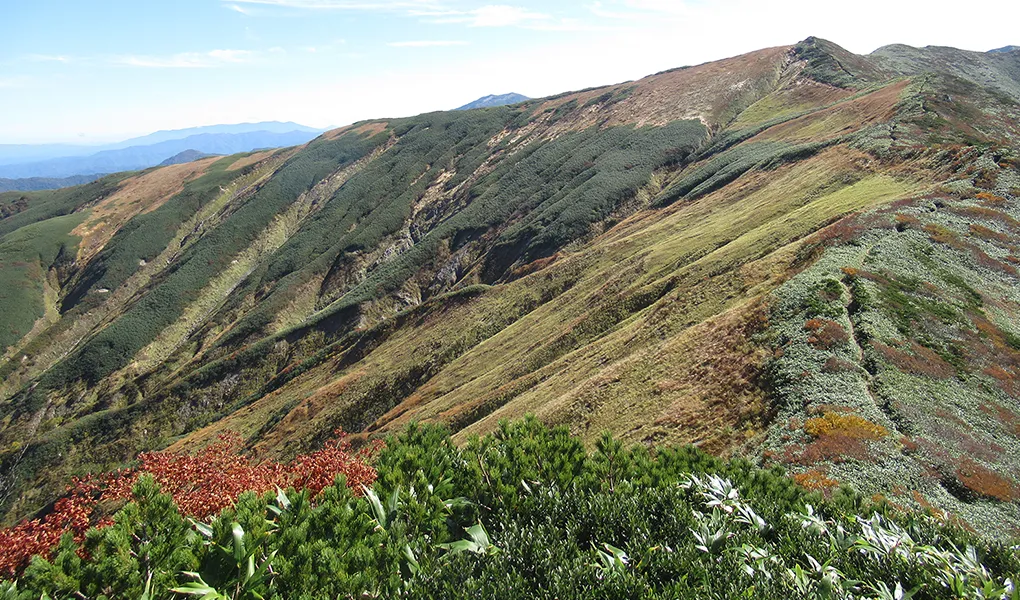
The Iide mountain range has forests of native beech, Erman's birch, and Japanese pine. These forests are habitats for large mammals like the Japanese black bear and serow. Mt. Iide (2,105 m) is also a sacred site for mountain worship.
Mountain Worship and Volcanic Scenery
The mountains of Bandai-Asahi National Park have long been important to practitioners of the mountain asceticism called Shugendo. The faith emerged in the Nara period (710–794) and blends elements and practices of Shinto mountain worship, Buddhism, and local folk beliefs.
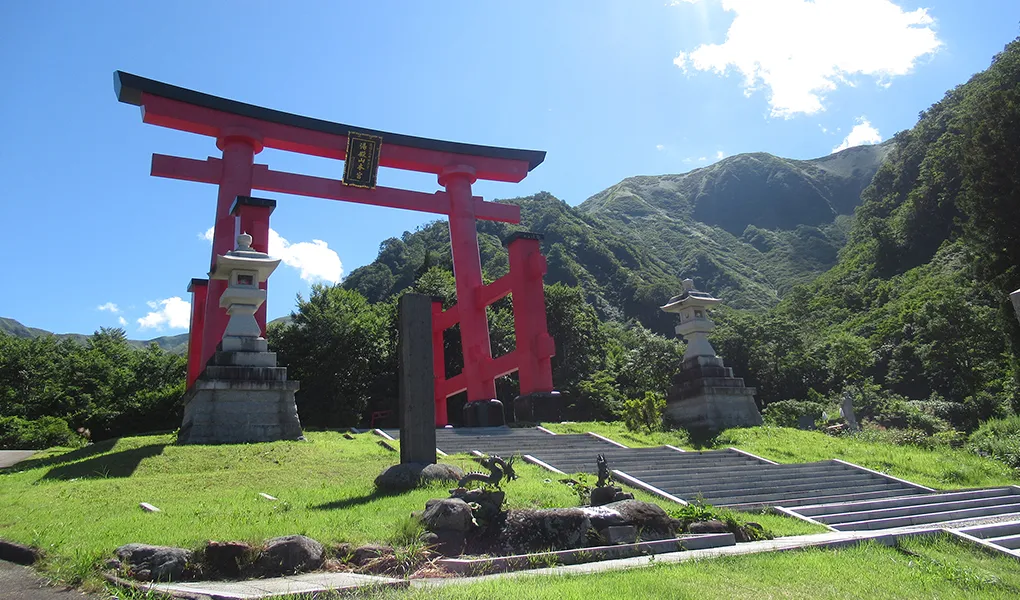
There are many sites of worship across the mountain ranges that comprise the national park: the Three Sacred Mountains of Dewa in Yamagata Prefecture; the Iide mountain range, which spans Yamagata, Niigata, and Fukushima Prefectures; and the stratovolcanoes of Mt. Bandai, Mt. Azuma-Kofuji, and Mt. Adatara in Fukushima Prefecture. Routes like the Bandai-Azuma Skyline winding through the mountains afford striking views of the peaks that have drawn generations of Shugendo practitioners (yamabushi).
Shugendo emphasizes the interconnection between humans and nature. Important spiritual sites around the Three Sacred Mountains of Dewa include the Five-Storied Pagoda of Mt. Haguro and Yudonosan Shrine. At the annual Shoreisai Festival, held on Mt. Haguro on December 31, visitors can watch the ritual burning of a straw effigy of a demon.
Mt. Bandai
Mt. Bandai is an active stratovolcano. The mountain as seen from the Urabandai area is notable for its partially collapsed peak which is the result of a major eruption in 1888. The same eruption triggered rock avalanches that completely buried five villages in Urabandai and dammed up valleys. This led to the formation of numerous bodies of water including the Goshikinuma Ponds. These polychromatic ponds are colored by a combination of volcanic sediment, minerals, and iron oxide that have leached into the lake beds over the years. Lake Hibara formed when a valley was blocked up by debris and filled with water. The remains of Hibara Village lie at the bottom of the lake.
Bandaisan Geopark
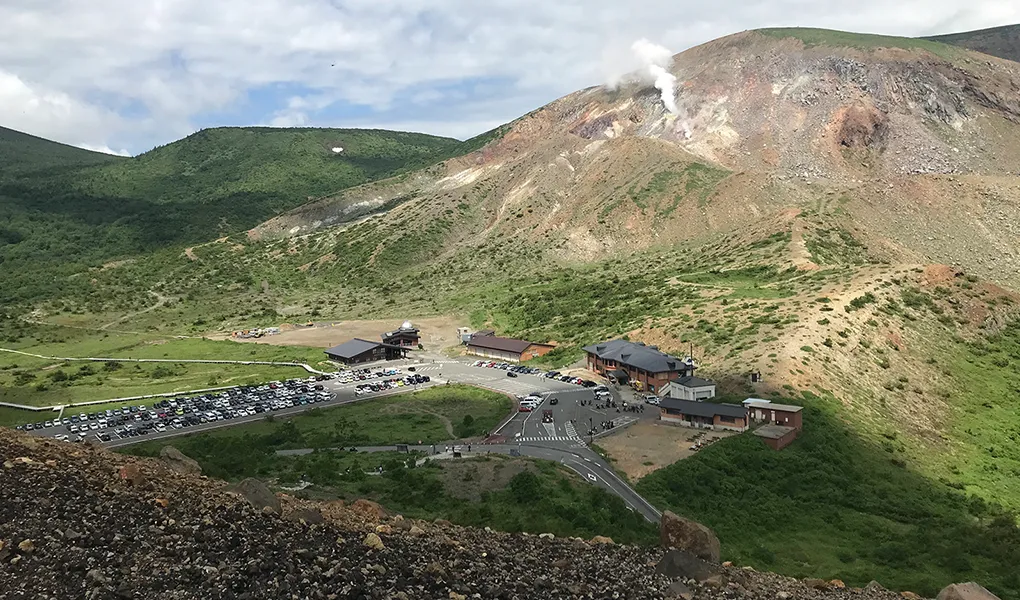
Bandaisan Geopark encompasses sites within Bandai-Asahi National Park and around Lake Inawashiro. The sites are recognized for their geological and topographical significance and encourage visitors to consider both the destructive and creative forces of volcanic activity.
Bandai-Asahi National Park