
Bandaisan Geopark
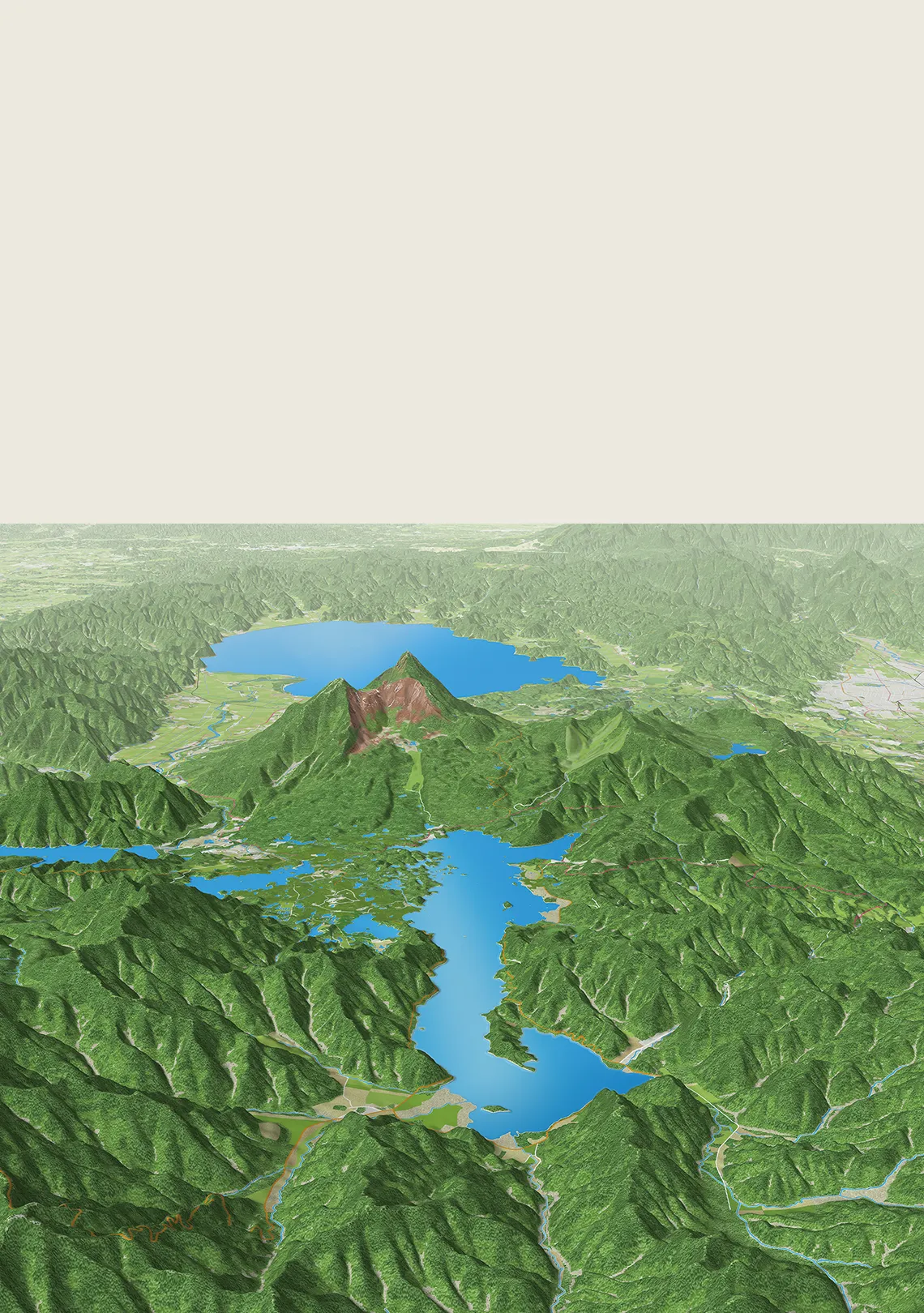
Bandaisan Geopark encompasses sites within Bandai-Asahi National Park and around Lake Inawashiro that are recognized for their geological and topographical significance. They include Mt. Bandai, an 1,816-meter stratovolcano. The mountain was reshaped by two large eruptions in 806 and 1888, the latter of which dramatically altered the surrounding landscape and had a devastating impact on local communities. The geopark was established in 2011 to help protect and manage the area's natural resources through education, conservation, and sustainable development. The village of Kitashiobara and the towns of Bandai and Inawashiro are within the geopark, and the communities play an active role in park initiatives.
Bandaisan Geopark is part of the Japanese Geoparks Network (JGN), a nonprofit organization that was formed in 2009. There are over 200 sites of natural, historical, and cultural significance within the geopark, which rangers and other staff work to conserve in cooperation with Bandai-Asahi National Park. Geopark staff also provide education programs to local schools and facilitate conservation activities across municipalities.
The JGN operates under the same guiding principles and certification standards as UNESCO Global Geoparks, which was established in 2015. Bandaisan Geopark chronicles the region's geological and cultural history through its mountains, wetlands and lakes, while also providing educational opportunities for younger generations to ensure a sustainable future.
Education Initiatives
Education is a core value promoted at Bandaisan Geopark. Staff from the geopark work with elementary and secondary schools in the municipalities of Bandai, Inawashiro, and Kitashiobara—all located within the geopark—to organize programs for both the classroom and the field. Students learn about the region's geology, history, and unique ecosystem through excursions and hands-on activities.
Disaster-prevention awareness and mitigation techniques are a major focus of the geopark's education programs, and the volcanic Mt. Bandai provides a real-life case study. In 1888 when the volcano erupted, 86 people from Inawashiro perished in a mudflow. The surviving residents worked together to restore their community after the devastating event. Today, geopark staff build upon this legacy by training younger generations in natural disaster management.
The geopark also offers programs for student groups visiting from other parts of Japan, and the staff support research projects at the university level and beyond. Additionally, independent “geoguides,” local guides certified by the geopark, teach visitors about the local area's history, culture, and wildlife.
Sustainable Development Initiatives
Bandaisan Geopark implements sustainable initiatives through a circular model that uses profits from tourism to promote education and conservation. Staff from the geopark work with governmental bodies, research groups, businesses, as well as independent geoguides, to build connections between the natural environment and local communities. The sustainable development initiatives are reviewed and validated every four years when the Japan Geopark Committee recertifies the geopark.
Facilities such as the Urabandai Visitor Center, the Mt. Bandai Eruption Memorial Museum, and the Hibara Historical Museum document the history of the Mt. Bandai region. Geoguides are independent local guides certified by the geopark to introduce sites of historical, cultural, and geological significance, giving visitors a deeper understanding of the area.
Conservation Initiatives
Environmental protection is central to the mission of Bandaisan Geopark and is carried out through a range of activities and projects. The geopark manages the upkeep of the historical, cultural, and natural sites around Mt. Bandai through tasks such as grass mowing, erosion control, litter removal, and inspection of trails to remove hazards and maintain signage.
The geopark carries out additional conservation programs with the Ministry of the Environment's Urabandai Ranger Office and the Urabandai Ecotourism Association. A critical part of the conservation mission is addressing challenges such as invasive species, which threaten the natural environment of the region.
Geopark staff disseminate information on the latest conservation initiatives to community groups and independent geoguides, who are certified to guide visitors around the geopark. Parts of Bandaisan Geopark are located within the larger Bandai-Asahi National Park, and the two entities cooperate to promote conservation efforts in partnership with the Ministry of the Environment.
Japanese Geoparks Network
The Japanese Geoparks Network (JGN) includes nearly 50 geoparks, 10 of which are also UNESCO Global Geoparks. The network was established in 2007 to connect professional geologists and private organizations involved in geological research. The first geoparks were designated the following year, and the network became a nonprofit organization in 2009. Bandaisan Geopark was certified by the JGN in 2011. Like all geoparks around the world, it is recertified every 4 years.
In addition to overseeing and certifying the geoparks in Japan, the JGN holds information-sharing events and offers support to areas that have been affected by natural disasters. Both the Japanese Geoparks and UNESCO Global Geoparks organizations prioritize the involvement of residents in establishing dialogues, sharing knowledge, and collaboratively building a future for the community and the natural environment. This approach is based on the core values of education, conservation, and sustainable development.